Showing posts with label Chevrolet Volt. Show all posts

Saturday, December 7, 2013

Honda Fit EV - The Agony and the Ecstasy of Electric Motoring

My Fit EV fills up at the Blink Network charging station.
The Honda Fit EV is a great example of everything that’s wonderful — and terrible — about living with an electric car. I just spent a week with a Reflection Blue FIT EV and it took me on a real adventure.

Let’s start with the upsides first. Nobody can argue that electric cars aren’t cleaner than gasoline burners. Of course, how much cleaner depends on how the electricity that you use is generated (coal-fired plant? Hydro-electric dam? Nuclear power plant?). But you aren’t burning anything in the car itself — there isn’t even a tailpipe.

The EPA’s green ratings for the Fit EV are a perfect 10 for Smog and Greenhouse Gas. The window sticker says you’ll save $9,100 in fuel costs over five years compared to the average new vehicle.

Electric motors are quiet and smooth. My tester made a little high-pitched whine when it gained momentum, but otherwise all I heard, even at freeway speeds, was a little hum from the tires and a very minimal bit of wind noise. Being a Honda, the car was well built and rattle- and buzz-free.

The price of electricity is significantly less than gasoline, especially if you generate it from your own rooftop solar panels. I don’t have any yet, but my research showed that to go 30 miles in a gas version of the Fit would take one gallon of gas at $4.00; an Electric fit would use about $1.00 worth of electricity.

How about the negatives? At this point, the biggest problem with electric cars, including the Fit, is range. Imagine if you had to put gas into your car’s tank three gallons at a time. With a 73-mile range like the Fit, you need a daily charge, if not twice a day. Charging at home in reasonable time means installing a 220-volt charger in your garage. Otherwise, at 110 volts, it could take longer to fill an empty battery than overnight. A 220-volt public charger takes about four hours.

Another range-related issue is usage. If you plan to drive your EV only for commuting, and your daily mileage fits comfortably within the car’s range, then you can charge it up at night and the cycle works. However, if you want to come home after work and then take your car out again, you may not be able to do it. Also, forget those 150-mile round trips to visit the grandkids or long vacation excursions. In these cases, you’d better take the other (gas) car.

Another problem is price. The Fit EV drives very nicely, is well finished, and comes pretty well equipped, but it’s still based on the Fit, which is Honda’s cheapest car. You can buy the basic gas-powered Fit starting at $16,215, while the price of my test car was $37,415! And despite their wildly different drivetrains, the two versions look nearly identical, except for a chrome smile up front and EV badges on the electric.

Nissan’s, the pioneer in the mainstream EV market, created a new model — the Leaf — to avoid this kind of comparison between basic gas model and upscale electric. Honda, along with Ford, Fiat, and Chevrolet, is using available platforms — a cost-saving move but one that may be harder to sell to the public.

There are significant federal and state rebates that can take up to $10,000 off the price of an EV, but it still costs a lot more than a gas-powered model. Good leasing deals are out there. Currently, you can lease a Fit EV for three years at $259 a month, although availability is very limited.

Of course, the Tesla Model S is another case entirely. It’s very expensive, starting at $71,070, but the range is not an issue, at 208 or 265 miles, depending on model. Most of us, though, will have to opt for the more ordinary EVs.

The challenge of driving an EV is learning how to live carefully on your meager energy budget. The Fit’s instrument panel has a Power/Charge gauge on the left that shows you if you’re using electricity or generating it and on the right is a full/empty gauge for the battery.

There is also a digital estimated range display front and center. You can make this figure larger or smaller depending on whether you choose Econ, Normal, or Sport mode on the left side of the steering column. With, Econ, the 100% full range is 73 miles. Pushing the Normal button drops that to 62, and Sport drops further to 56. These are approximations, and they can vary tremendously depending on how you drive.

Econ is the most frugal setting, but during the cold snap of my test week, I found that it reduced the heater function to nearly nothing. Switching to Normal restores normal climate function, and also makes the car much quicker off the line when you press the accelerator. Sport mode gives another boost to acceleration, but seems unnecessary otherwise.

My real adventure and educational experience was in getting the car charged up. My first day, I was surprised to drive my 30 miles to work and see the range drop from 59 to just 48. I had recovered a lot of the electricity because I was in terrible stop-and-go traffic. Secret: EVs do exceptionally well in these conditions, because speeds are low and there is plenty of opportunity to recharge the battery with regenerative braking.

With this success, I figured I was safe to take the trip back without a recharge. However, by the time I got close to home that Tuesday evening, the instruments were displaying a worrisome 11-mile range and a Low Battery warning light came on as I approached my house.

To avoid stress, on Wednesday, I went looking for a charging station near my office. I had used one before that was a 20-minute walk away, but it was a Blink Network site and I only had a ChargePoint card from the press fleet. So, I went to the nearest ChargePoint station — more than a mile away — and found that I couldn’t use it. It was on a major software company’s campus, and it was reserved.

However, I made a call to ChargePoint and was able to get connected — but I had to use the personal ChargePoint account I had set up months ago. I enjoyed a vigorous 35-minute walk back to the office, but I’d hate to have to do that every day. I got a ride to pick up the car later.

The following day, I decided to try using the ChargePoint chargers right across the street from my office. Although they were in front of a well-known video rental company, I thought that maybe the wizards at ChargePoint could open them up for me the way they had on Wednesday. The polite woman on the other side of the line did her best, but it was a no go. I then decided to try the Blink Network station again, hoping for a miracle.

I got my miracle. When I called Blink, Dustin told me that they have a Guest User plan. So, in five minutes, my hungry Fit was charging up. One more day was taken care of, and I got my nice 20-minute walk back to work.

I was beginning to feel like I had it together. I was much more relaxed having the security of a full charge morning and night. So, I drove in Normal instead of Econ mode and enjoyed the warmth and responsiveness that the Fit offers. That’s when I realized how much I enjoyed the car. The Fit is absolutely stable and feels light and taut, although my driving was not on exciting roads. The motor’s torque pulls you forward nicely, and the expansive glass greenhouse and long dash make it feel spacious. The silvery panels and light gray plastic (none of it padded) helped, too. I was able to play the audio system without any apparent impact on my electricity budget.

Charge companies keep in touch with you. I received text messages from ChargePoint telling me when the car was full — and also when I removed the charger from the car (in case it was someone else!). Blink Network sent me emails with the same contents. After my experience with them, I signed up for a free membership, so I’ll be ready when the next electric test car comes along.

The bottom line is, if you are willing to put up with the obvious issues of range and price, an EV may be for you — and the Honda is nice to drive and handy to use, with its hatchback. If I owned one, I would be sure there was a charger at my workplace and install one in my garage. I would also be sure to have a reliable second car that burns petrol available for longer trips.

There are other options. Besides the several EVs on the market, there are plug-in hybrids, which allow you limited all-electric driving and then switch to efficient hybrid operation. The Toyota Prius Plug-In and Ford C-Max Energi are good examples. Another choice is the Chevrolet Volt, which is an electric car with a built-in gasoline engine that’s used only as a generator to charge the battery for extended range.

These cars eliminate the range issues, but are still more expensive than comparable gasoline vehicles. They are even more expensive than their regular hybrid versions. And, they still use some gas.

The electric-only range for plug-in hybrids varies from about 13 miles for the Prius to 21 for the C-Max and 38 for the Volt. These models, like the current EVs and standard hybrids, are all interim steps that will eventually lead to what we really want — electric vehicles with a useful range, quick and convenient charging, and an affordable price.

Friday, March 16, 2012

Getting a Charge out of the Chevy Volt

The Chevrolet Volt is unique in the world of hybrid and electric vehicles. It is powered by an electric motor all the time, unlike a hybrid, in which the gasoline engine powers the car part of the time. However, an on-board gas engine is called in to service the charge the battery when the car runs out of electricity, which, in my case, was when the 32 miles worth of power was exhausted. The engine itself never powers the wheels directly.

This gas engine is meant to remove "range anxiety," a malady suffered by owners of all-electric cars like the Nissan Leaf. The Leaf can go up to 90 miles on a charge, but when you're out, you're stranded.

The Volt is a compact sedan--not a large one--and will hold four people--not five. The rear seat has a console along the middle to prevent that. I'm not sure why, but I'm guessing today that it limits the weight the car must bear, thereby increasing the range of the electric powertrain.

Chevy showed a concept car of the Volt several years ago and it was much more angular than today's car. However, it was "futuristic" and the production car is, too. Styling is a little bit advanced and different from end to end. Especially notable is the silvery "grille," through which no air can pass (it comes in under the bumper for the engine--a common setup today). The dark strips below the side windows are an iteration of a design concept from the original show car and make the smallish windows look--but not feel--larger.

The interior is where the Volt goes wild. Despite being finished in hard plastics throughout, it is very evocative of modernity and even a little adventurous. The twin cockpit theme--from as far back as the original Corvette, is in evidence, and the shiny plastic door inserts convey the old painted feeling of those cars. But of course this car is built like a fortress and has umpteen airbags to protect you.

The instrument panel has two rectangular screens-one directly behind the steering wheel and one in the center spot on the dash Both convey, in brightly colored graphics, what's happening with the car, and you can make numerous selections to monitor such functions as where the power is coming from, how the battery is being charged, and recent fuel economy. It tells you after every charge how well you did--and what proportion of your mileage was powered by electrons and how much was thanks to hydrocarbons.

I was thrilled to be able to drive my Crystal Red test car the entire 23 miles to work each day on pure electricity. The car feels strong, pulls eagerly away from stops, and sails down the road in blissful silence. My car's stereo was happy to put out the music, although one time, I sat and let it play for about 20 minutes and I could see that it was draining my battery!

Everything you do affects range, and you learn to behave carefully to maximize that. You can monitor your habits to see how efficient you are. And, there's a little gadget you can select for the panel directly in front that shows you visually, using a rising or falling sphere, whether you're rolling along fine or are accelerating or braking too much. The goal, for economy, is to keep the ball in the middle, and it stays there if you are just rolling along. Hard acceleration or braking make the ball stop move off-center. It's a learning tool, much like the ones in Hybrids, but this is especially three-dimensional--as are all the displays in the Volt.

Charging is easy. You just uncoil the thick orange cord and plug it in the wall. Then, pop open the nicely-finished mini door on the left front fender and plug in the flashlight-sized plug. It has a handle and a built-in light to locate the outlet easily. The lights on the charger glow green, the car chirps its horn once, and a small green light goes on on the dash near the windshield. You can check how it's doing by opening the car and looking at the dash display.

I was happy to see, each morning, that I had a full battery. It's displayed like a row of gold bars in the T shape of the actual battery, which is hidden below the central tunnel and back seat. I enjoyed the quality of the car--despite its non-luxurious interior materials, it felt sold, looked fine, and worked perfectly. The seats, with optional leather in my tester, held me comfortably.

Two regrets. One--I wish the car had a longer range, because it feels great to drive under electric power. Two--the price. My car had a $40,000 base price, plus $4,000 worth of options. At $44,000, I could be looking at a Mercedes-Benz. But--only Chevy makes the Volt. I assume that future versions will increase the electric battery range and, with volume sales, the prices should come down. There is a $7,500 tax credit to help ease the pain, as well.

Wednesday, January 25, 2012

Cars of the (Sustainable) Future

It's a tough time in the automotive business now. Most of the companies are struggling to sell enough vehicles to make a profit, GM and Chrysler are emerging from bankruptcy, Saab is R.I P. But there's more. The manufacturers will have to meet greatly increased environmental standards.

The corporate Average Fuel Economy (CAFE) standards in the U.S. now require that a manufacturer's cars average 27.5 miles per gallon. However, plans by the president would move that to 54.5 mpg by 2025. That's a huge jump, but it's based on many factors, including environmental concerns and a depleting supply of oil.

Manufacturers have explored alternative vehicles for years. Hybrid vehicles, exemplified by the Toyota Prius, can achieve higher fuel economy and run more cleanly, but there are also electric cars such as the Nissan Leaf now on the market, and other options includes (clean) Diesel vehicles, offered by multiple manufacturers, plug-in hybrids, such as the Chevrolet Volt, and in an emerging technology, hydrogen-powered fuel-cell vehicles. There are also numerous efforts to bring greater efficiency to existing gasoline vehicles, such as Mazda's SKYACTIV Technology.

It's not a time to worry about the shape of a fender or how fast it'll go. There are some certainties and some uncertainties, but one thing is clear--to meet that 54.5 CAFE standard, something major is going to have to change.

Yesterday, at the Future Cars, Future Transportation Forum, put on by the Western Automotive Journalists (WAJ), I got to drive several vehicles that will be doing their part to help in this effort. I also got to hear industry experts from several manufacturers and two writers from major automotive publications give their thoughts on what's coming. Local TV station KGO Channel 7 covered the event.

My first drive was in the Mercedes-Benz B-Class F-Cell electric vehicle. It's a compact hatchback, small but not teeny, that uses a hydrogen-powered fuel cell. Fuel cells generate electricity electricity in a chemical reaction between hydrogen and oxygen that yields only pure water vapor. It sounds like a dream come true.

But--the downsides include the need to manufacture the hydrogen (it's everywhere, but not in the form you need for the car) and the biggest issue of all--there's no infrastructure. There are 250,000 gas stations in the country but virtually no hydrogen stations. Los Angeles has a few, and that's where you can lease one of a few initial Mercedes B-Class F-Cells.

Driving the car on a short test loop showed that besides being a very sweet little people carrier (with Mercedes styling), there is absolutely no loss of performance or utility running on hydrogen. Smooth and silent, it would be a guaranteed winner, if there was a place to fuel it. And--what would it cost? That could be a problem, at least until enough were produced that economies of scale kicked in.

I also sampled Toyota's FCHV-adv, fresh fuel cell technology in a previous-generation Toyota Highlander body. Like the Mercedes-Benz, it drove very nicely and quietly. Toyota has been working on this problem for decades. This latest model has improvements to the cells, the control system, the tanks, cold-weather startup, fuel efficiency and cruising range. But there are still no hydrogen stations around.

Electric vehicles have been in the experimental stage for many years and have even been on the market for limited purposes, essentially overgrown golf carts. The Nissan Leaf represents the first viable "regular car" that you can buy. I tested one recently, but at the event, I got to sample Mitsubushi's i-MiEV, a compact hatch that looks like a future pod more than anything else on the road. The bottom line? It drove silently and smoothly, like one would expect. It has rear seats that fold down and a handy hatch, a pleasant, if simple linterior, and would serve my personal commute needs exactly. However, Like all electrics, with the possible exception of the $100,000 + Tesla Roadster, it has a range of less than 100 miles, though, and would cost nearly $30,000 before national and state rebates dropped it down closer to $20,000. Dave Patterson of Mitsubishi is enthusiastic about the future of electric cars, and told us that the company will introduce multiple electrics over the next few years, including a crossover that seats seven.

The problems with electric cars, besides range, include the time (hours) it takes to refill the tank. With improvements in battery technology and quick charging, electric cars will have to play a big part in the future automotive market to help meet the CAFE standards.

The Chevrolet Volt tries to work it both ways by giving about 35 miles of service on pure electricity before switching to a hybrid mode, in which a gasoline engine kicks in to power the electric motor. It seems like an interim solution, but the Volt I drove yesterday felt solid, and with all its colorful displays inside, it would be  very entertaining for a while. If you had a 15-mile commute each way, you could end up using no gasoline at all. 

What about simply improving the cars we already have? Mazda is attempting this with the SKYACTIV Technology. I drove a Mazda3 with this recently, and also took a short run at the event. Nice: a six-speed manual for sportiness. The friendly Mazda rep explained the changes in the engine and transmission, and how the technology would include many more aspects in upcoming vehicles, including the brand-new CX-5 crossover, which will be out very soon. The experts in the panels all agreed that the internal combustion gasoline engine was going to be around for a while, so improving every aspect of it, and the cars that use it, makes a lot of sense.

Diesel cars have been around for a long time. Mercedes-Benz has sold tons of them. Nowadays, Volkswagen is a major Diesel marketer in the U.S. I drove the brand-new Passat TDI, which boasts amazingly high fuel economy (43 mpg Highway) and a huge range of nearly 800 miles! The downside of Diesel is that it's still burning a fuel, and Diesel emits more particulate matter than gasoline. But as a short-term solution, especially towards hitting that 54.5 mpg average, it's a player. And the performance can be quite thrilling with its high torque.

So, what's coming? None of the expert panelists could say for sure, but they all agreed that for a technology to have an impact it would have to represent at least 15 percent of the automotive market. Today, none of these alternative vehicle types comes close. Even the ubiquitous Toyota Prius barely makes a dent.

It's going to be very interesting, and 13 years is not a long time to get this very important job done.


Monday, October 24, 2011

Chevrolet Turns 100

We celebrated the 100th anniversary of Ford Motor Company back in 2003, but now it's that other American icon's turn to hit the century mark. Chevrolet is running fat advertisements in the car magazines (and probably everywhere else) to let us know that the Heartbeat of America is still going strong.

Nowadays, with the enthusiasm for German engineering (BMW, Mercedes, Audi) and respect for quality. economy and reliability (Toyota, Honda) and rise of the Korean brands (Hyundai, Kia) some folks may have never actually driven an American car. This could be when they start, however, with truly worthwhile daily drivers such as the Ford Fusion and Chevy Malibu for starters. The quality and desirability has moved into the the compacts how, with Chevy's new Cruze taking honors for top seller in the segment. The Ford Focus is finally more or less the same as the highly prized European model.

Chevy is definitely selling the historical imagery now, with the iconic 1955-7 models, Corvettes (pretty much any), and the beloved Chevy trucks (Like a Rock, remember?). My family had several Chevys when I was growing up, including a 1960 (first year) Corvair four-door sedan, 1961 Brookwood wagon, 1963 Corvair convertible, 1964 Corvette (Dad, after divorce) and 1968 Malibu (Dad, after remarriage). Of course the metallic blue Corvette was the most exciting, but because it was extremely impractical, it wasn't around very long.

There will be a lot of new cars from Chevy in the near future, including the subcompact Sonic (out now--unrelated to the burger chain) and the even smaller Spark, which will have an electric version. The plug-in hybrid Volt is probably the best representative of "today's Chevy," and although it's a niche vehicle for now, the brand will be pushing in every way to stay relevant to today's and tomorrow's car shoppers.

Monday, August 29, 2011

Electric Car Sightings Update

Well, electric cars are starting to make it onto the roads, but it's still a trickle. As I drive my two hours a day around the central San Francisco Bay Area I am seeing a Nissan LEAF at least a couple of times a week (see photo). I've seen one Chevrolet Volt in the last month.

Last week, I saw two of the $100K + Tesla Roadsters on the same day -- one in the morning and one in the evening -- both with custom plates. I wrote down the first one: NIL CO2. Cute, huh? I also saw a gas-powered car with a bumper sticker that said, "My next car won't have one of these"--and there was an arrow pointing down to its exhaust pipe. The sticker had a Tesla logo on it. That car may turn out to be a Tesla Model S--due next year.

The fact is, it is going to take a while before you see a lot of electric cars on the road. The batteries are still expensive and the quantities of cars that the manufacturers can turn out and deliver is very limited. And, folks want a car that does everything, and electric vehicles still have limitations--mainly range issues.

Meanwhile, Costco is in the news for saying they plan to shut down their electric charging stations. I've heard a lot about this from a surprising number of people. From what I can tell, the stations need to be upgraded and Costco is balking at the cost--because they, rightfully or not, don't believe that there is much call for electric car charging at their locations.

I say, without knowing all the facts, that it is probably a good short-term business decision to shut them down. But, it's a terrible public relations move, and puts the company at the back, rather than at the front, of the wave of the future. I think that public charging availability is part of what will extend the functionality and acceptability of electric cars.

Also newsworthy: The Nissan LEAF all-electric car will have greater availability with its 2012 models. About 4,000 LEAFs have been delivered so far in California, Arizona, Hawaii, Oregon, Texas, Washington (state) and Tennessee (Nissan is based there). Now, Nissan is expanding into Alabama, Florida, Georgia, Illinois, Maryland, Mississippi, North Carolina, South Carolina, Virginia and Washington, D.C.

Also, the new 2012 LEAF will come with a quick charging port (480 volts) and a cold weather package, which includes a battery warmer, heated seats and a heated steering wheel.

Stay tuned!

Wednesday, March 9, 2011

WAJ Media Days--Great Fun

From Monday night to Wednesday afternoon, I spent many happy hours in Monterey at the 19th Annual Western Automotive Journalists Media Days.

Besides the great opportunity to drive a wide selection of the latest cars on local roads and at Mazda Raceway Laguna Seca, it was a chance to reconnect with with my automotive colleagues and favorite industry representatives.

Highlights for me this year included:

  • A special presentation from Chrysler, who brought samples of all of their revamped products as well as the new Dodges, Jeeps and Fiat.

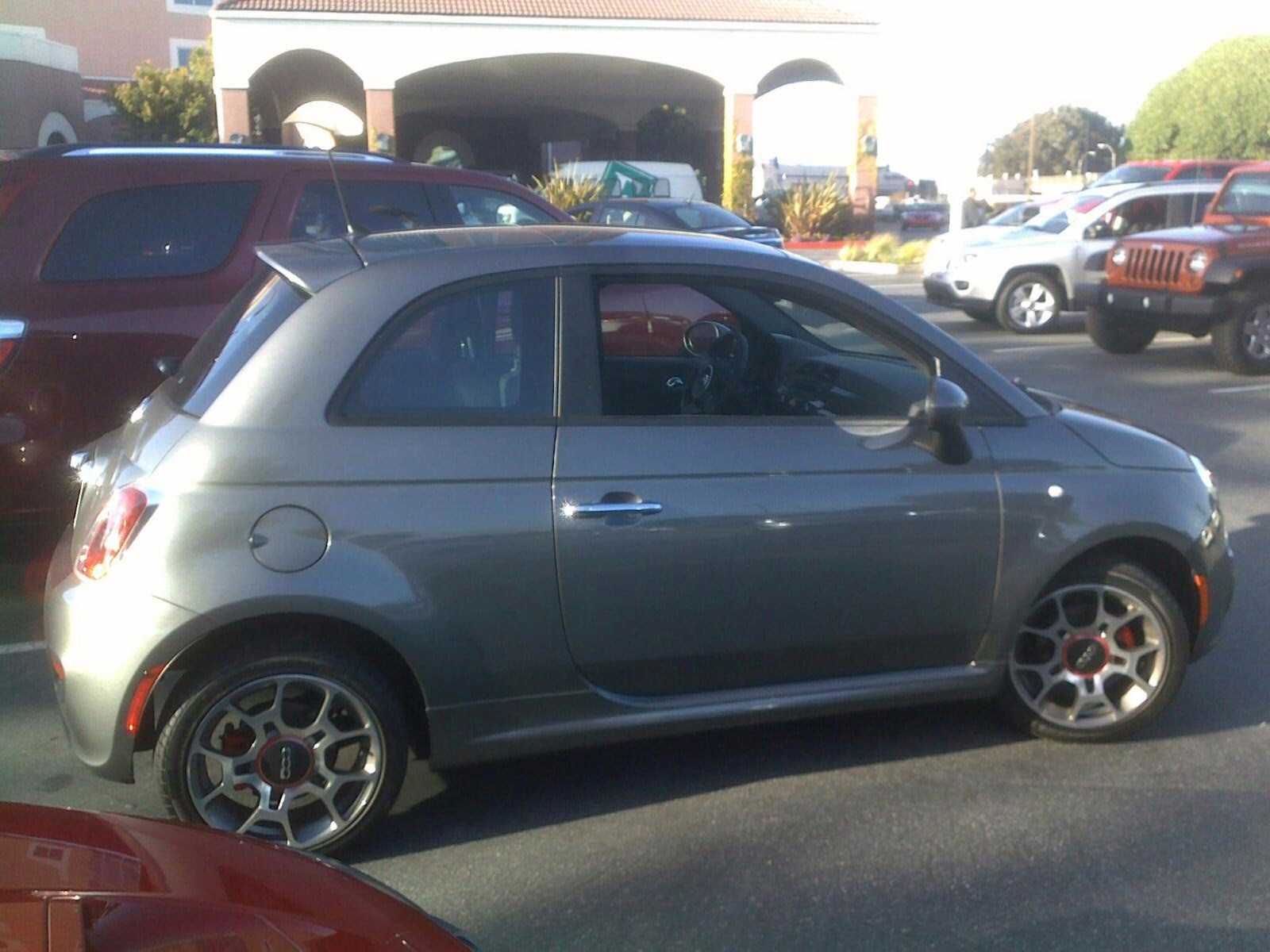
  • A chance to drive local roads, some winding and scenic, in the long-awaited new Fiat 500 (pictured) as well as the Volvo S60, 2012 Ford Focus, Cadillac CTS Coupe--with a manual six-speed, BMW 335is, Chevrolet Volt plug-in hybrid, Honda CR-Z manual-equipped hybrid, and the Mitsubishi i-MIEV and smart battery electric vehicles.

  • A busy track day with a selection of great vehicles including the MAZDASPEED3--which was just as much fun as it is on the road--and the surprising Buick Regal Turbo--with a manual six-speed! The Subaru WRX STi was marvelously tenacious on the curving racetrack. Even the Volt was OK on the track--running only on electricity.

  • There was an impromptu drag race between the smart and the i-MIEV to see who the best electric was--the i-MIEV won.
  • The Hyundai Equus impressed me with its amazing luxury--like a Lexus for less money--incredible.

  • Many tasty meals, including the usual banquet on Tuesday night.

The weather was incredibly good, considering the date. I wore a T-shirt outside both days.

Thursday, January 6, 2011

Chevy Volt Arrives in S.F. Bay Area

I normally drive a car before writing about it, but this opportunity was too good to pass up. I heard about the first Chevrolet Volt to be delivered in the San Francisco Bay Area and went to the new owner's blog. He had written all about the car and the process. Go see it for yourself. There was his email address, so I contacted Patrick Wang, and within the hour, we had made plans to meet.

Over coffee, Patrick told me all about his decision to buy the new plug-in hybrid Volt and then gave me a tour and a ride. Read all about it in the San Leandro Times.

In 25 words or less, it's a new way of driving, but feels familiar. It's an electric car for the first 30 to 50 miles, and then a gasoline engine kicks in to charge the battery for many more miles of motoring. I'm looking forward to driving one myself before too long.