Showing posts with label aging. Show all posts

Tuesday, April 2, 2013

Zero to Sixty, Chapter 9. It's Up to You


I wear my heart on my sleeve.

Time marches on — it’s a cliché. Even if you dye your hair or get a tummy tuck, you can’t change the clock or the calendar. But you can live fully today, and try to bring everything that has ever meant something to you into the present and do something about it. 

I wanted to play the bass when I was 18, but it took until I was 50—an age where I could join AARP — to actually make it happen. In the ten years since, it has blossomed into a vital part of my life.

From chasing down the annual model changes at the car dealers as a teenager, I now write a weekly auto column, and yesterday took delivery of my 1,000th test vehicle. It took me 21 years to get here, but it has been well worth it.
Car No. 1,000 - A 2013 BMW M6 Convertible

As a 60-year-old with a white beard, I have the right to dispense a little advice. Here it is:

Don’t wait to do what you love. Start now.

Monday, April 1, 2013

Zero to Sixty, Chapter 8. Who's that Old Guy in the Mirror?


I remember my father saying that he didn’t identify with the image reflected back at him from his unkind mirror. My grandparents seemed perplexed at being in their 80’s. Approaching 60, I’m beginning to understand what they were talking about.

Maybe there’s something in the way I talk to myself that reinforces my identity. Does everyone do that? I wake up in the morning and as I turn off the alarm and sit up slowly, I start to list the things I have to do that day. It sets the tone. Is there an important meeting? Do I get to go listen to an interesting new band after work? Is that leak in the bathroom still not repaired? Is there a rehearsal to run to after dinner? Am I late on a project? I find that the day normally proceeds differently than I projected — and my feelings, once I show up at work, change over the course of the day regardless of my first thoughts at 5:15 a.m.

Is life that way, too? We tell ourselves who we are, perhaps forgetting that so much has changed, and is always changing. We think we’re the same person but we’re not. Or maybe we are essentially ourselves, inside, forever.

I was looking at a photo that I uncovered recently in a neglected corner of my home office. It shows my wife’s 1991 Toyota Tercel, when it was new, parked in front of the townhouse where we lived from 1990 to 2002. Isn’t it amazing that an image captures and freezes a moment, while time marches on? That car is long gone. We don’t live in that townhouse anymore. But I can remember looking out the front window at the car. I was there—now I’m here. The memory remains.

Looking at old photos of myself gives me the same eerie sensation. Young, slim, dark-haired. The thing is, I still feel like that person, despite the many changes that have taken place to my body — my brain’s container.

The changes are hard to miss. Heavier, by as much as 35 pounds, depending on when the photo is from. Hair is mostly gray now, and thinning, especially in the crown. Beard — white. Eyes — lines under them. Skin — starting to look more like parchment; more moles. Chest hair is turning white. Muscle tone – diminishing. Back – sore more often. Prostate? Enlarged (within normal range). 

But—beyond all that, I still feel like “me.” What do the people in the store or restaurant think? They see an older guy. They don’t know that it’s really me inside. I feel like I’m misrepresenting myself. Don’t they know I’m just a young guy, starting out? I’m guessing that most of us have this disconnect.

In a funny sort of way, being able to develop my adolescent interests in music and cars into real activities in my 50’s has made me more vital that I might have been if hadn’t made decisions years ago. I’ll never be a young bass player in a band, but I can play the music of my youth now, hoping to get the feeling I might have had if I’d had the fearlessness of my middle years back when I really needed it.

Sunday, March 31, 2013

Zero to Sixty, Chapter 7. Am I the Oldest One Here?


John Howell-Books
Back when I was in college, I worked in the Financial Aid office at San Francisco State University. I was 23 to 25 years old—a little older than a freshman, but still in the freshness of youth. I remember Edith, who worked in the office with me. She was probably 60 herself—a kind, but significantly overweight woman who had probably been great at the manual tasks of office management at one time, but was overwhelmed by using computers. And this was in the mid to late 1970’s.

I don’t want to be Edith, as nice as she was, but it does seem that I’m now one of the oldest people at work. In a meeting, I look around and see no gray heads—I’m it. I’m now older than the head of the company, older than my boss — and for the first time, I’m older than the president of the United States. I’m even older than my doctor (who replaced the one who retired). 

What does this mean, if anything? When I was young, I thought that the older people were in charge — and respected them. Now, although I actually have years of life experience and am more comfortable with myself, I still feel like one of the kids.

Does being in charge make you “older?” Is it an internal decision to be a parent to those around you? I could be the parent of some of my colleagues. My granddaughter is the age of some of my work colleagues’ kids.

After I graduated from college in 1978, I went to work in a long-established antiquarian bookstore in San Francisco. Just to show how things have changed, here’s how I got the job. I met a woman at a party. I took the streetcar downtown to the employment agency where she worked. I sat down and she opened a metal box with file cards in it.

She pulled out a card. “How would you like to work in a bookstore?” she asked. I said, “Sure.” She sent me over there and I was hired and began my first full-time post-college job at John Howell-Books.

The bookstore was owned and operated by Warren Howell, “the white-thatched dean of western bookmen.” He was about 6-6, solidly built, and used to being in charge. His father, John, had established the business in 1912, and designed and moved it into a quaint location near Union Square in 1924. 

Mr. Howell’s right-hand woman was Sally Zaiser, a gracious and highly intelligent woman who was in the Who’s Who of American Women. She managed the accounting, which was done with a pen in a paper ledger. No, we had no computers there—not even a cash register (we had a cash drawer). 

We did take credit cards. We put the card into a metal sliding device and pulled the handle across it. The charge slip had carbon paper in it, so we had multiple copies. We had to call an 800 number to confirm the purchase.

Sally and I got along just fine, although she and Mr. Howell were both conservative Republicans and I was the opposite. It was a huge change from going to college, and Sally was not much like Edith.

In any case, I realize now that Mr. Howell was 65 when I first started working there—and Sally was 63. That’s essentially my age now. But they were what 60-year-old people were like back then, and were in a different role as well. So — age may not bring authority, even if it does impart knowledge and experience.

Things are upside down now, but I’m OK with it.

Thursday, March 28, 2013

Zero to Sixty, Chapter 4. I Remember That


If  you're old enough, you know him instantly.
There is an advantage to being around a while. I am old enough to remember when particular and significant things happened.

My wife and I were watching Meet the Press recently. At the beginning, they roll a collage of changing faces of historical persons in black and white. I recognized everyone. Someone who was 20 probably wouldn’t know anyone. On the show, Tom Brokaw spoke, as a guest. Boy, he looks old, but I remember his youthful face delivering the news. Heck, I remember Walter Cronkite in the 1960s with his pencil mustache, and trademark “And that’s the way it is…” Walter who?

There are painful memories, certainly, including assassinations —the Kennedys, Martin Luther King and others in the 1960s, Harvey Milk and George Moscone in 1978—right at the same time as Jonestown. John Lennon’s sudden murder in New York in 1980.

More pain—the Vietnam War, and its protest movement. The Draft. The 1968 Democratic Convention. Nixon’s  election as president and crushing McGovern in ’72. Watergate ending it. Chernobyl. Biafra. 9-11.

There have been many good and or interesting things too. People still talk about the Beatles. I saw them play on the Ed Sullivan Show and got my first Beatles album for my 11th birthday. I took a walk down Haight Street in 1967 with my dad and it changed my life (not his—he was an elderly 40 at the time). I have nearly 50 years of musical memories starting in 1964 with the aforementioned Fab Four and running through the 70s and 80s. The 90s — not so much. Today, I listen with experienced ears, and some of it I like, while some of it bounces off.

I remember when if you left the house, you were off the grid. No one had cell phones. There were phone booths everywhere, and for a dime, you could call someone else—at their house or job—but you were out of touch. Some may look back at that time nostalgically.

I remember when you waited until the news came on or even to the next day’s newspaper to find out what happened. The 2012 election was the first time that I didn’t even see a newspaper the next day. I had the facts online before Election Day had even ended in California.

Is it important for people to know about these events, to give them historical perspective? Or is it just one way that younger people are different—in not having that experience? Only time will tell what is truly relevant to today’s young people and what will fill their memories when their odometers hit 120,000.

Monday, March 25, 2013

Zero to Sixty, Chapter 2. The Shape of Aging


We can all do the math—when you’re born you’re age zero and when you turn 60, six decades have passed. But how do we conceive of it? There are many ways to represent this passage of time. Here are a few I thought up.


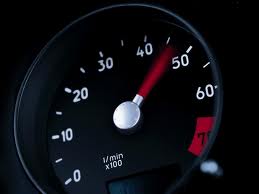
The Speedometer (and the Odometer)

Just like a sprint with a race car – the speedometer shows my current velocity. It’s a commonly quoted performance figure for a race car. What’s your 0-60 time? If it’s under five seconds, that’s pretty fast. Over ten seconds and it’s a family sedan. 

But maybe a speedometer isn’t a very good gauge for age. My speed changes the minute I take my foot off the gas or hit the brake—or stomp on it harder. Perhaps an odometer is a better concept, showing my accumulated mileage. For people, maybe each year could be, say, 2,000 miles. A car with 120,000 miles on it should have plenty of useful life left in it, don’t you think?


The Timeline

Draw a straight line between two dots—birth and 60 (or whatever your age). That’s about as simple as it could get, right? The problem is, there is no quality to a line. It just connects the dots. You could add milestones, of course, such as starting school, high school graduation, first job, marriage, first kid, retirement. Or how about first kiss? First live gig with your band? First published story? First prize in an art show? The timeline is one way of looking at it, but it is moving only from left to right. And, it feels like time is accelerating, but a line can’t indicate speed. It just lines up events—the ones you choose to think about—in chronological order.

Another kind of timeline is the bar on an iPod, which fills in until the song is over, when another new bar begins. 3:27 of your life has passed. I hope you enjoyed it.


The Expanding Circle (or Blob)

Considering what we gain by living over time, maybe an expanding circle is a good image to represent our life unfolding. From a helpless baby we learn about our world, meet people, experience many activities and events, and grow. The circle doesn’t have to be a perfect circle—maybe a blob would be better. Some areas flourish, some don’t. My musical side is the former while my athletic side is the latter. For each person it would be a different shape. 

How far does the shape expand? Does it reach its maximum capacity, like a balloon? Can it burst? How quickly does it grow? Are there periods of greater and lesser growth (image of  tree rings)? Some may think that life expands more quickly when you’re young and slows down when you age, but that may not be true—certainly not for everyone. And maybe it’s an illusion, since adding to a larger circle is less obvious.


The Focusing Circle

This is a somewhat like the opposite of the Expanding Circle. In this case, there is probably expansion for a while, but later, the less important areas fade from lack of interest or attention, and you concentrate your attention on the most important things. This could mean dropping a few hobbies to concentrate on one or two. You could end some unproductive relationships. You could clean out your garage. For a very elderly person, it could mean getting one good visit to the bathroom, or having one stimulating conversation.
Certainly, over time I’ve become aware of my splintered attention. What if I could cut out the distractions? Could I make more progress in the areas I kept “lit”?


The Unrolling Film

The file image works for people who remember watching Super8 home movies, before the age of the DVD. This image presumes a finite (but unknown) amount of life, that at one point, possibly  to the complete surprise of the individual, suddenly runs out. You see the take-up reel, full of film, rotating quickly, free of tension, as the tail flaps against the projector. The show’s over.

This concept takes for granted that there is an already-shot movie that’s simply playing out over time. But I think that life is constantly changing, and isn’t predetermined. If you stop smoking you can make the movie ten years longer.  I’d rather believe that we renew our lives every day, and that our actions today make a difference in the quality and quantity of the journey.


The Graph

Statistics can illuminate or obfuscate—or even titillate. We are used to seeing graphs that show the human life as an ascending line, peaking in the early 20’s and then declining, even precipitously, after some advanced age. Does that mean that I’m running at reduced capacity at 60? Well, sure, I do have less hair, less bone density, less muscle mass, and on and on. But what about my emotional life? What about my experience? Am I worn out or am I filled with experience? Where’s the other graph with the ascending line for wisdom?

We could also display a bar chart. This method works well for comparing now and then, or me versus the statistical average. These comparisons, for whatever they may be worth, are probably going to be depressing if they are indicating the body’s functionality, but could be very encouraging if they portray relative wisdom of a teenager and a sexagenarian (I like the sound of that!).


The Meandering Line

What if life is a journey—sequential and not linear? This makes sense, doesn’t it? I start out in Buffalo, New York but end up in San Francisco. I begin in the Music Department and graduate in English. I work in the book business but wind my way through sales, sports marketing, technical writing, and then what? I get married, go through a divorce and remarry.

The meandering line can indicate change well, but doesn’t show growth or accumulation of anything. If it meanders too randomly, it shows a lack of direction.  It also doesn’t indicate the quality of the trip or what method you used to get from place to place, or how long you spent there. It doesn’t indicate your companions either.

But for tracking the stops along the way, sure, it’s worth a look.


The Rising Spiral

It’s great to be a positive thinker, and truly believe that every day, in every way, I’m getting better and better. This could even help counteract the pain of consulting a graph that shows your declining vigor or viewing a life odometer that’s collected more than 100,000 miles on it. 

Are we truly getting better? And if so, why? What is each of us doing that makes us a better person today? Are we working out? Are we helping other people? Are we improving the world or ourselves in some way? Are we driving a Nissan Leaf electric car to work? What is the spiral measuring—simply “betterness?” I’d like to imagine I’m on a spiral, but I’m not sure.

I’d hate to see it as a descending spiral. That would be like a dead leaf falling from a tree—or water going down the drain. No thanks.


Interconnected Circles

I’ve drawn one of these charts before. It starts with me in the center and I draw all the attachments I have to things—people, jobs, activities. It shows my connections to the outside world. This kind of chart is a fascinating exercise, and is a great ways to appreciate how much you have going for you as you get older. Your Facebook friend list is long. Your list of job references is, too. You’re a member of this, a participant in that. You’ve got kids—and grandkids. This grid of interconnectivity helps prevent loneliness and a feeling of being out of the loop. The challenge is to figure out where you are amidst all that activity. You can make the circles bigger or smaller to indicate importance. Color-code them to show relationships. Go crazy.


A Dot in the Center of a Circle

This image is ideal for the Zen practitioner—or the front of a Target store. We are individual but part of a larger whole. We are in the center of our own life, with everything in it around us. We are all we’ll ever be all the time, part of the great oneness of place and time. It’s a great thing to consider. It may or may not require any religious belief, having no hierarchy built in. We just are.


The Flying Calendar Pages

This is the perfect black-and-white movie image to show the years flying by. Preferably, there’s dramatic music playing. It portrays time as passing day by day, month by month, and year by year. And, in that, it’s accurate. We live one day at a time and one year at a time. We celebrate (or mark in some way) our birthdays. If we think of life as a series of days, maybe we can experience it in small enough pieces to think that we can actually do something that matters right now. 

Conversely, if we think only of one day at a time we may not make plans. We need to manage that calendar by looking at today’s page—but making appointments on other pages, too. You can do this on your smart phone today—and it’ll even remind you, if you want.